Growing Mexican Petunias in Oklahoma:
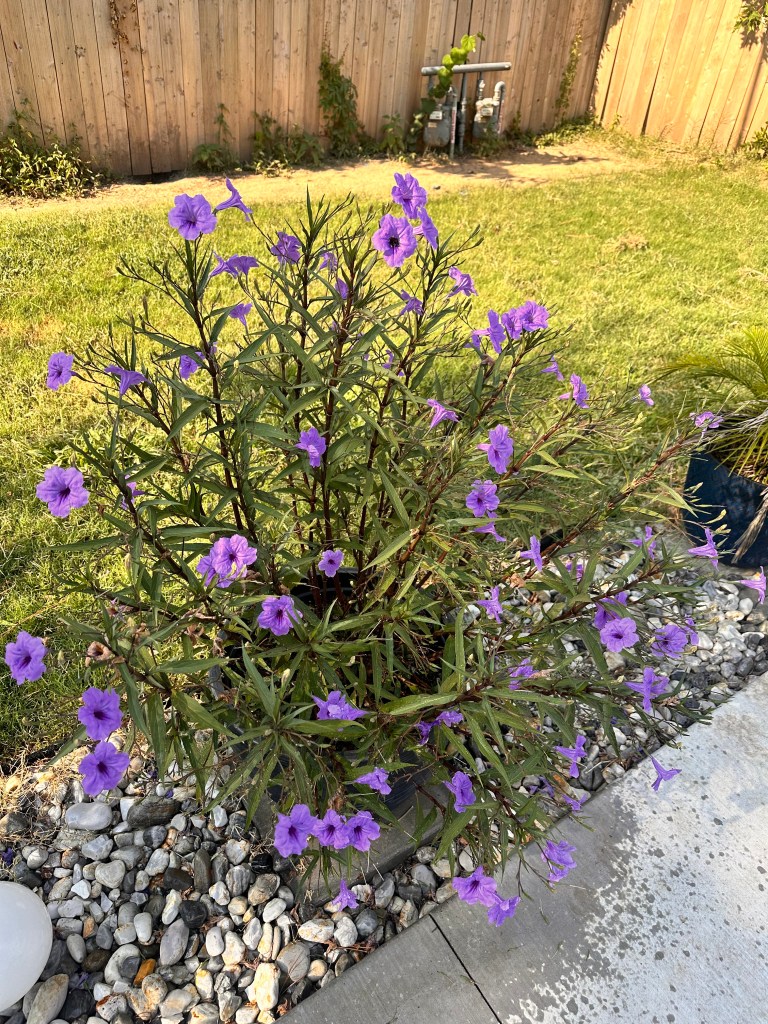
Mexican petunias (Ruellia simplex), known for their striking purple, pink, or white flowers and resilience, are a popular choice for gardeners looking to add a touch of color to their landscapes or in my case, around my pool. Native to Mexico and the southwestern United States, these hardy perennials can thrive in various conditions, making them well-suited to Oklahoma’s climate. However, their vigorous growth habits require some management. Here’s how to successfully grow and care for Mexican petunias in Oklahoma.
Why Choose Mexican Petunias?
Mexican petunias are loved for their:
• Vibrant Blooms: These plants produce trumpet-shaped flowers that bloom from summer to fall, creating a bright and beautiful display.
• Versatility: They can tolerate a range of soil types, from wet to dry, and can thrive in full sun or partial shade.
• Drought Resistance: Once established, Mexican petunias can handle periods of drought, making them ideal for Oklahoma’s sometimes unpredictable weather.
• Low Maintenance: These plants require minimal care, making them perfect for gardeners/plant lovers of all levels.
Planting Mexican Petunias in Oklahoma
1. Location: Choose a sunny spot in your garden or yard. While Mexican petunias can tolerate partial shade, they bloom best with at least 6 hours of direct sunlight daily. In Oklahoma, the intense summer sun can be a bit harsh, so some afternoon shade can be beneficial.
2. Soil: Mexican petunias aren’t fussy about soil types. They can grow in anything from sandy soils to heavy clay, as long as the soil is well-drained. However, they thrive in rich, loamy soil. If your soil is particularly poor, amend it with compost or organic matter to give your plants a good start.
3. Spacing: These plants can spread rapidly, so be mindful of spacing. Plant them about 12-18 inches apart to allow for their mature size and to prevent overcrowding.
4. Container Planting: If you’re concerned about the plant spreading too much, consider growing Mexican petunias in containers. This allows you to control their growth and move them around your garden, pool, or patio as needed.
Watering and Fertilizing
1. Watering: Mexican petunias are drought-tolerant once established, but they still need regular watering during their first growing season. Water them deeply once a week, more frequently during hot, dry spells. Once established, they can handle periods of drought but will bloom more profusely with consistent moisture.
2. Fertilizing: These plants aren’t heavy feeders, but they will benefit from a balanced, slow-release fertilizer applied in early spring. If you want to encourage more blooms, use a fertilizer that is higher in phosphorus (the middle number on the fertilizer package). Be cautious not to over-fertilize, as this can lead to excessive foliage growth at the expense of flowers.
Controlling Their Spread
One of the key considerations when planting Mexican petunias in Oklahoma is their aggressive growth habit. These plants can quickly spread and become invasive if not properly managed:
1. Root Barriers: If planting in the ground, consider installing root barriers to keep the plant from spreading into unwanted areas of your garden or flower bed.
2. Regular Pruning: Trim back the plants regularly to keep them under control. Cutting them back in late fall or early spring can help manage their size and prevent them from taking over.
3. Container Growing: As mentioned, planting in containers is an effective way to prevent Mexican petunias from spreading uncontrollably while still enjoying their beauty.
Winter Care
Oklahoma’s winters can be unpredictable, with some regions experiencing freezing temperatures. While Mexican petunias are hardy in USDA zones 8-11, in Oklahoma (zone 7), you’ll need to take some precautions:
1. Mulching: Apply a thick layer of mulch around the base of the plants in late fall to protect the roots from freezing temperatures.
2. Bring Indoors: If you’re growing Mexican petunias in containers, bring them indoors or move them to a sheltered location during the winter months.
3. Cutting Back: After the first frost, cut the plants back to ground level. They may die back in the winter but will often regrow from the roots in the spring.
Pests and Diseases
Mexican petunias are generally resistant to pests and diseases, but you should still keep an eye out for common garden issues:
1. Aphids: These tiny insects can occasionally be a problem. If you notice them, spray your plants with a strong stream of water or use insecticidal soap.
2. Root Rot: Overwatering or poorly drained soil can lead to root rot. Ensure your plants are in well-drained soil, and avoid watering them too frequently.
3. Powdery Mildew: This fungal disease can affect Mexican petunias in humid conditions. To prevent it, ensure good air circulation around your plants and avoid overhead watering.
Mexican petunias are a beautiful and resilient addition to any Oklahoma garden or flower bed. With their vibrant blooms and easy-going nature, they can bring a burst of color to your landscape with minimal effort. However, their tendency to spread means you’ll need to manage them carefully. Whether you choose to plant them in the ground or in containers, following these care tips will help you enjoy your Mexican petunias for years to come.

 Plants, Pitties, and Power Foods
Leave a comment