🌾 Why Gluten Free Sourdough Is Trickier Than Regular Sourdough
If you’ve ever tried baking gluten free sourdough, you know it’s a whole different game from traditional sourdough. Here’s why it’s more challenging and why it’s also incredibly rewarding:
🥖 1. No Gluten = No Stretch
Gluten gives regular sourdough its structure, elasticity, and rise. Without it, the dough can’t trap gas as easily, making it denser and more fragile. Gluten free baker wannabes, like myself, rely on a blend of flours, starches, and natural binders (like psyllium husk) to mimic that structure.
🧫 2. The Starter Acts Differently
Gluten free starters need more attention; they ferment faster, can separate more easily, and require consistent feeding to stay active. Different flours (like brown rice, sorghum, or oat, or the combination of these) each have their own personality, which affects the flavor and activity level of your starter.
🌾 3. Every Flour Behaves Uniquely
There’s no “one size fits all” in gluten free baking. You have to find the right balance of whole grain (for flavor and nutrition) and starch (for lightness). Too much of one, and you end up with a brick or a gummy loaf.
💧 4. Texture & Hydration Are a Balancing Act
Gluten free doughs are more like thick batters than elastic doughs. Getting the moisture level right is key; too dry, and it crumbles; too wet, and it won’t hold shape.
⏳ 5. Patience (and Experimentation) Required
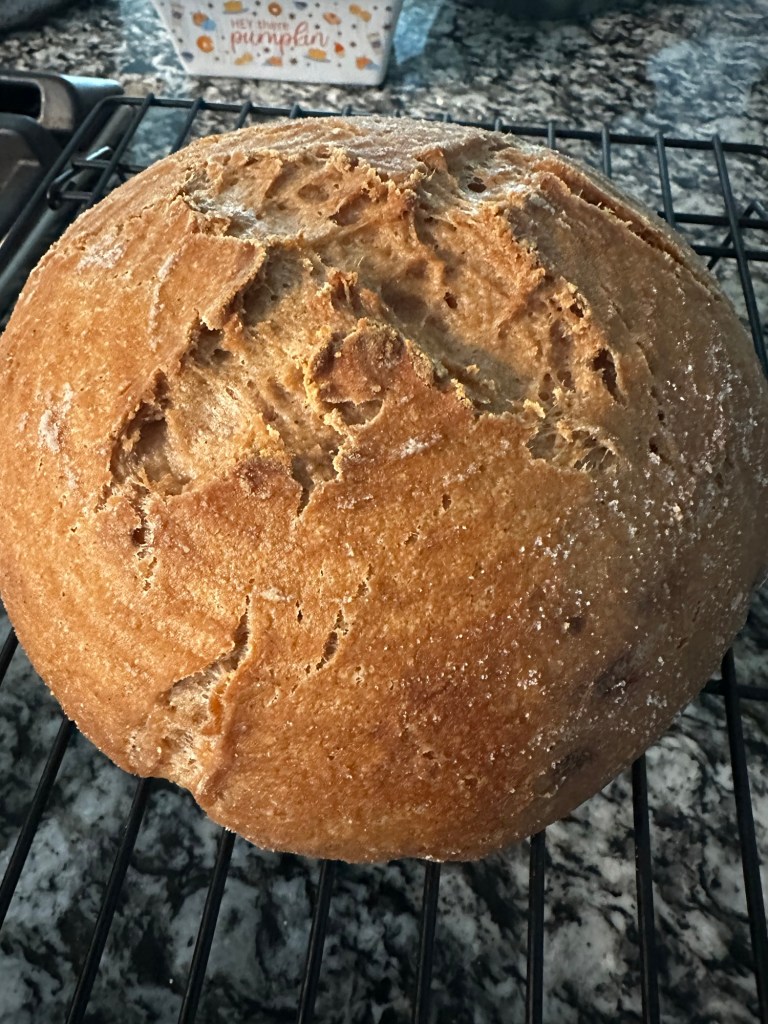
Gluten free sourdough takes trial and error. It’s science and art combined but when you pull that perfect, tangy, golden loaf from the oven, it’s pure magic.
✨ Gluten-free sourdough isn’t harder because it’s impossible, it’s harder because it’s different. Once you learn how your ingredients behave, you unlock a world of fresh, flavorful bread that fits your lifestyle beautifully.

 Plants, Pitties, and Power Foods
Leave a comment